Paralympic swimming and embracing one-size-fits-one
Sep 12, 2024
Jan 13, 2022
·
5
min read
The Paralympic games finished last week and my highlight was following the swimming heats and finals. I missed the 2020 games, so it had been a while since I last watched a Paralympic swimming heat (in person at the Rio 2016 games!), and I didn’t remember much.
After the first heat, I was surprised by the differences between athletes and had to pause and learn how the classification works. I learnt that athletes with different disabilities compete against each other because they're classified based on their swimming performance, not the disability itself.
Swimming events are divided into three main categories: freestyle, butterfly, and backstroke (S); breaststroke (SB); and individual medley (SM). Athletes undergo a point-assessment of the their functional body structure and performance in water, and are then assigned to classes numbered from 1 (for less mobility) to 14 (for more mobility).
When the men’s 200m freestyle S5 started, the scene below reminded me of Jutta Treviranus' concept of one-size-fits-one – people have different needs, and when they encounter solutions that offer flexibility and customisation, they’re more likely to be able to achieve their goals.
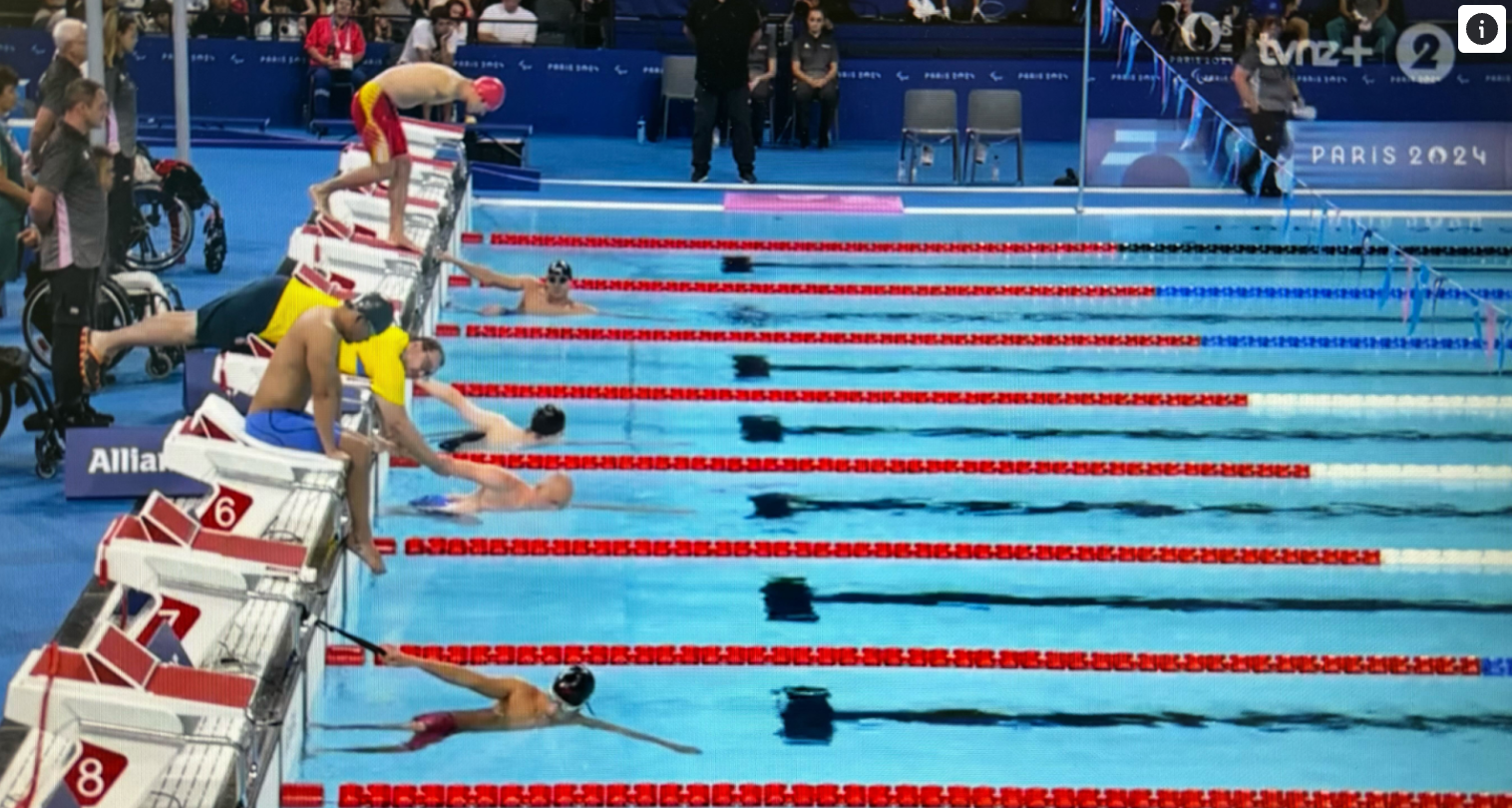
Let’s imagine all of these athletes had to follow the same requirements, or had to follow a “one-size-fits-all” way to participate in the heat:
- If the requirement was “you have to stand on the starting block”, swimmers in lanes 2, 4, 5 and 7 wouldn’t have been able to participate.
- If the requirement was “you must start in the water”, swimmers in lanes 3 and 6 wouldn’t have been able to participate.
- If the requirement was “your coach can’t support you”, the swimmer in lane 5 wouldn’t have been able to participate.
In the context of Paralympic swimming, this flexibility means each athlete can compete in the way that best suits their individual abilities and enables them to achieve their best performance.
But how can we translate this to digital products?
One-size-fits-one in digital products
To design for the one-size-fits-one concept, we need to recognise that our users have different needs and seek to understand more about these needs.
Jutta refers to the range of human diversity as an exploding star, where the majority are in the middle, and the minority spread out on the edges.
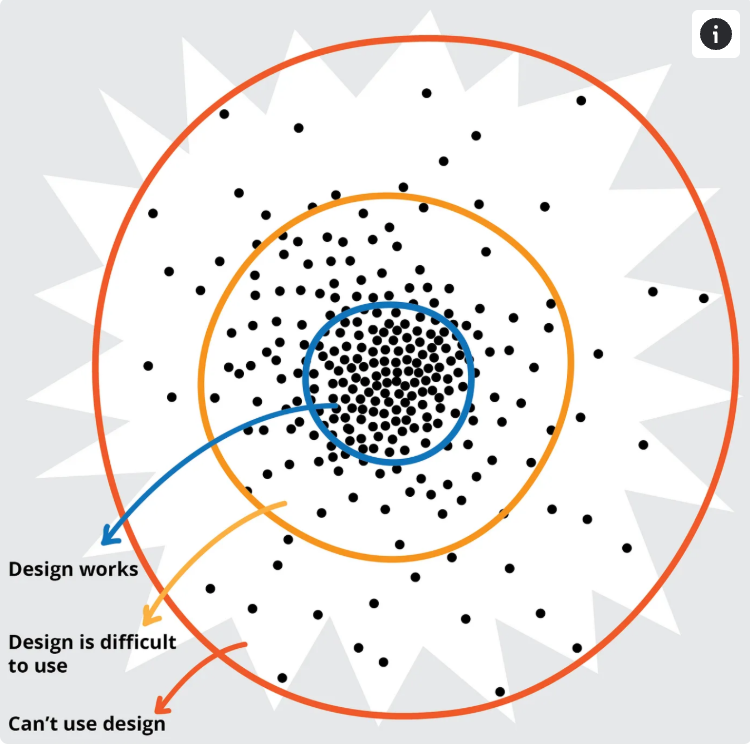
A common approach to product development is to focus on the majority at the centre of the star, because of the misconception that the only way to include the people on the edges is to build a solution that suits everyone, which would take time and money (and is impossible to achieve).
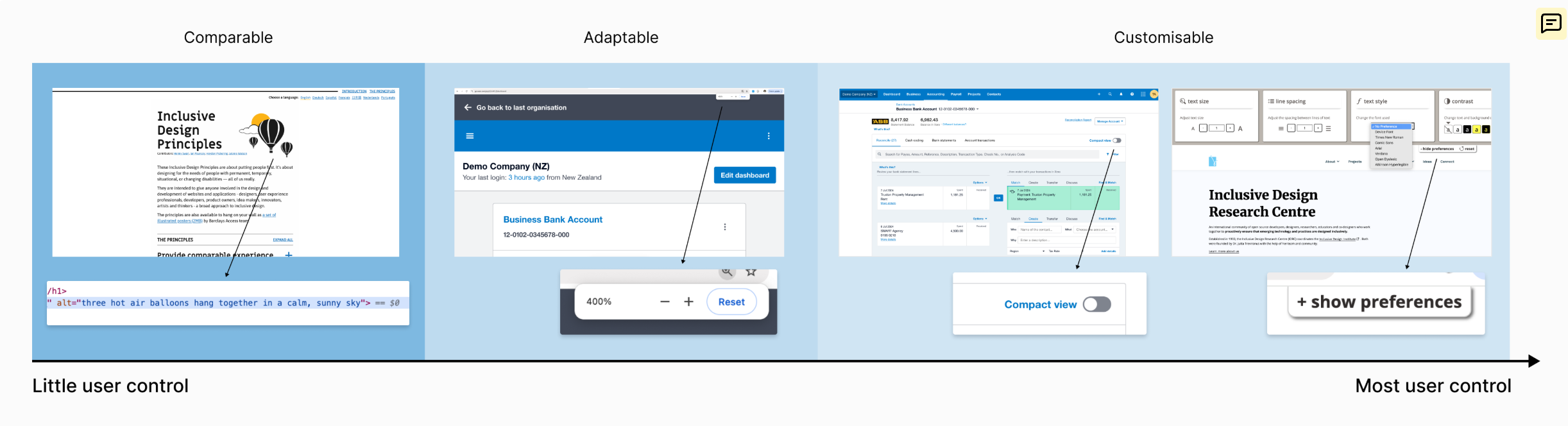
Instead of trying to follow this “one-size-fits-all” approach, we encourage teams to think about ways to make their experiences customisable, adaptable or comparable to suit the diverse customer needs.
Customisable experiences
Customisation is the most comprehensive way to enable flexibility and multiple ways to participate.
At a global level, changes are applied to every page and persist across sessions. This is particularly helpful in situations where content across the website is consistent, or when we have a deep understanding of our audience and their needs.
Customisation can also happen at a page level. This is helpful for situations where websites and experiences have varied content across pages. Having flexibility to make changes that only impact one page at a time allows the user to customise their experience per task. For example: a user prefers financial information in a dense format but a simple dashboard with only a few widgets.
Adaptable experiences
When customisation isn’t possible, make sure your designs and experiences are robust so they can adapt to the way users navigate. For example: making sure no content is lost when users need to zoom in (some will zoom in up to 400%!).
To understand how to make your designs more adaptable, refer to our accessibility user checks.
Comparable experiences
One more way to increase participation is by providing a comparable experience. Customers navigate in different ways, and regardless of the way they decide to navigate, they should be able to get value and consume the content on the page.
In the Accessibility team, we encourage the creation of comparable experiences for graphic-heavy interfaces, for example. One way to think about a comparable experience is to ask yourself: “How can I make this information valuable to someone who navigates using a screen reader?”
Embracing one-size-fits-one
Just as Paralympic athletes benefit from a system that accommodates their individual needs and strengths, our users thrive when our digital products are designed with flexibility in mind.
As we continue to develop and refine our digital products, let’s remember the lesson from the swimming heats: when we cater to individual needs by offering flexibility, we create a more robust and inclusive experience.
Moving beyond one-size-fits-all solutions, we’re able to create products that genuinely resonate with a diverse audience and empower everyone to engage fully, in the way that suits them best.
With the world focusing on the Paralympics, it’s a good time to watch (or re-watch) ‘I'm not your inspiration, thank you very much’, by Stella Young.